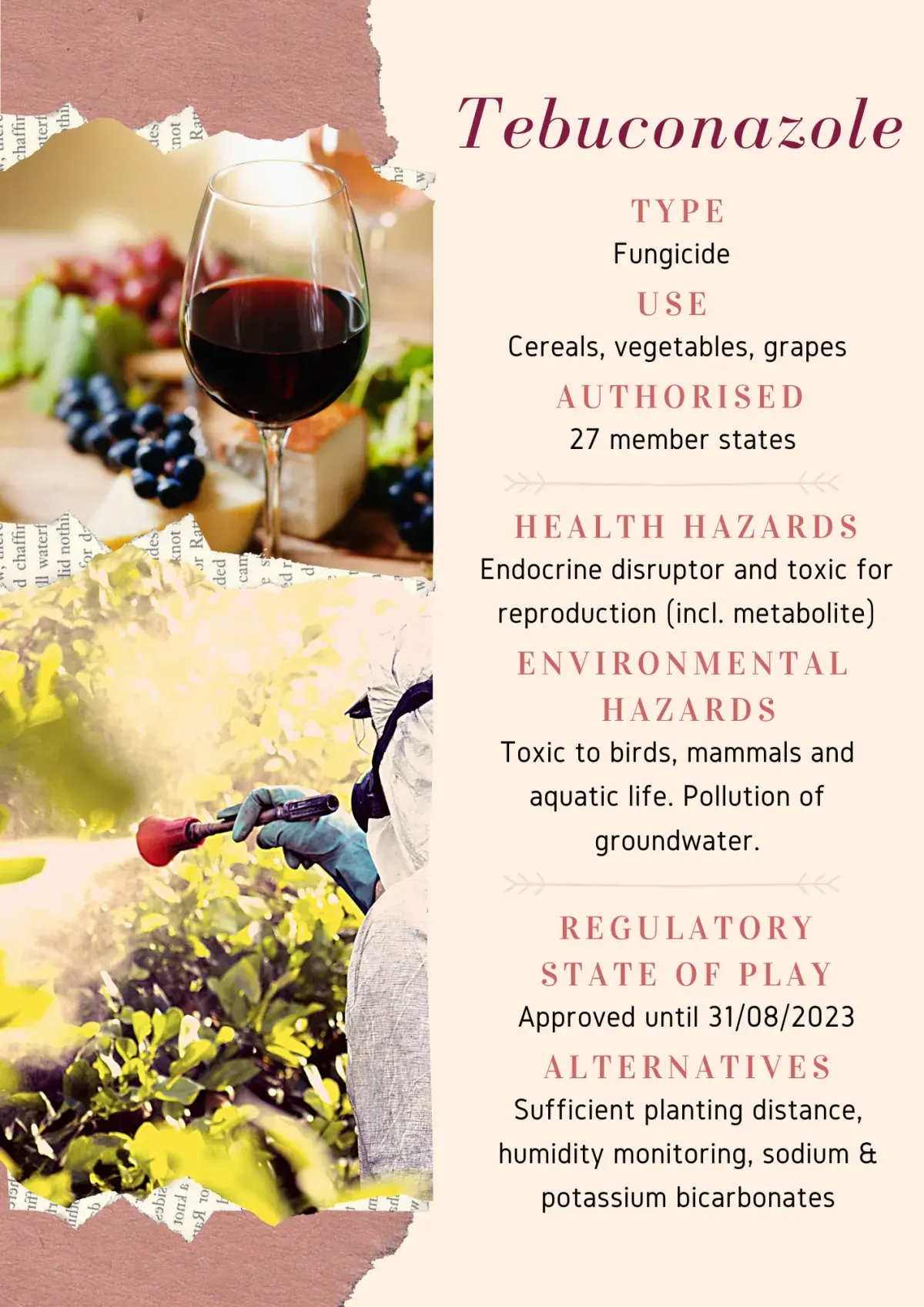
Toxic to reproduction (“R2” classified), with many negative findings on fetal development. Connected to liver tumours. Endocrine disruptor according to the EU Joint Research Centre (JRC): Altered steroid hormone levels; effects on receptor binding.
Long-term risk to insectivorous birds; long-term risk to granivorous birds; long-term risk to herbivorous mammals; long-term risk to granivorous mammals. Very toxic to aquatic life, acutely and with long-lasting effects (5-meter buffer required).
Authorised in all 27 member states.
Residues present in food are very high.
The most common Candidate-of-Substitutions-pesticide found in cherries, and commonly found in pears, apples and peaches. 172 Maximum Residue Limits (MRLs) above the Level of detection (LOD) of 0.01 mg/kg are established, ranging from 0.05 mg/kg to 40.00 mg/kg per product (top 10 highest MRLs).
ollowing five “unjustified” prolongations (each for one year), approved until 31/08/2024. The last prolongation is fought in EU Court by our French member Générations Futures.
Used on Cereals (wheat, barley, oat, rye), Oilseed rape & Grapes, mostly approved for spraying on fields outside, also for seed dressing of barley.
Resistant varieties, sufficient planting distance, humidity monitoring, sodium & potassium bicarbonates.