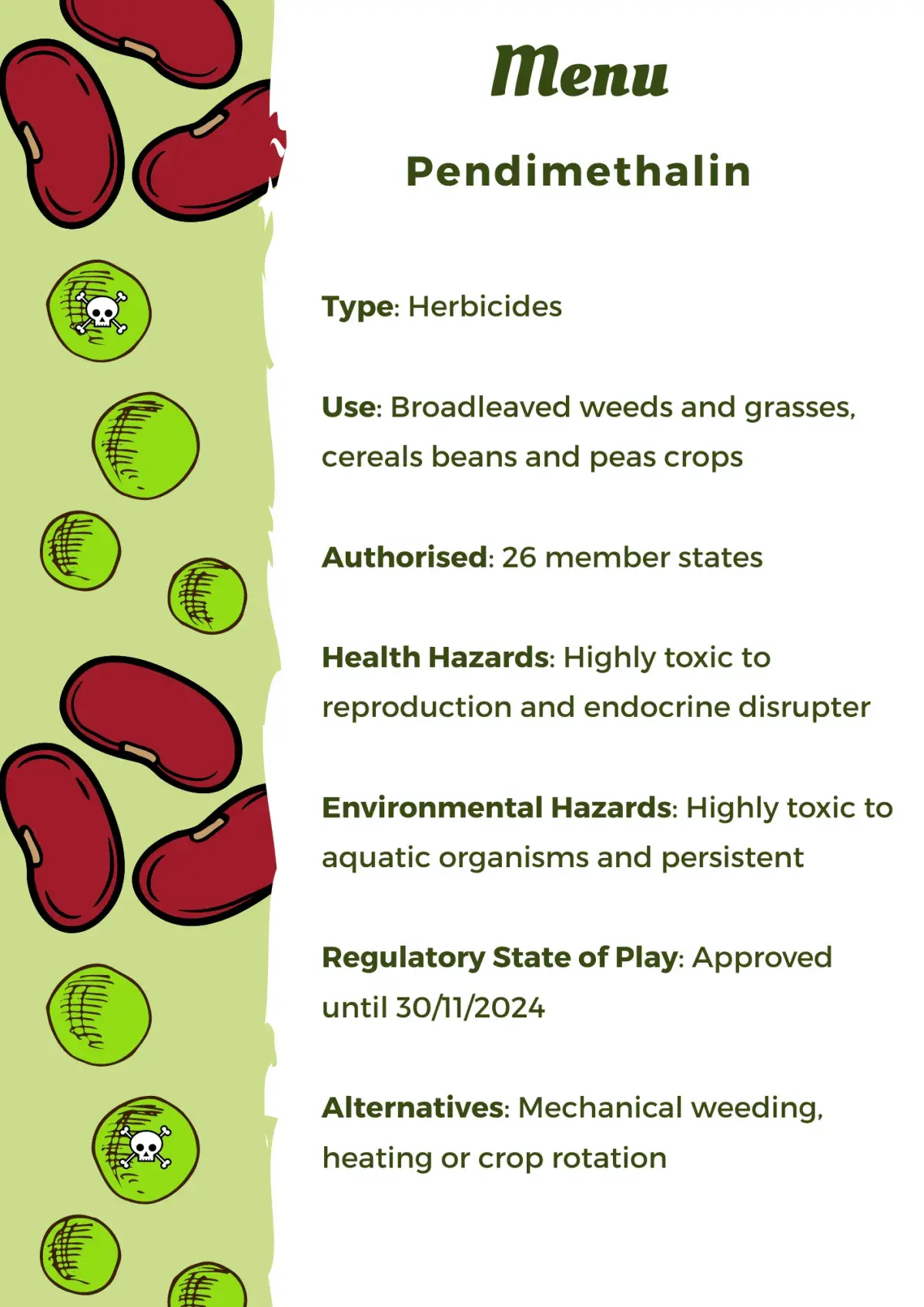
Toxic to reproduction ("R2" classified). Thyroid effects. Chromosome aberrations. Developmental effects. Endocrine disruptor according to the EU Joint Research Centre (JRC).
A high risk was identified for aquatic organisms (particularly algae). Classified as acute and chronic very toxic to aquatic life. Possibly a persistent (P) bioaccumulative (B) and toxic (T) or PBT substance.
Authorised in 26 member states.
72 Maximum Residue Limits (MRLs) above the Level of detection (LOD) of 0.01 mg/kg are established, ranging from 0.002mg/kg to 4.00 mg/kg per product (top 20 highest MRLs).
Approved until 30/11/2024.
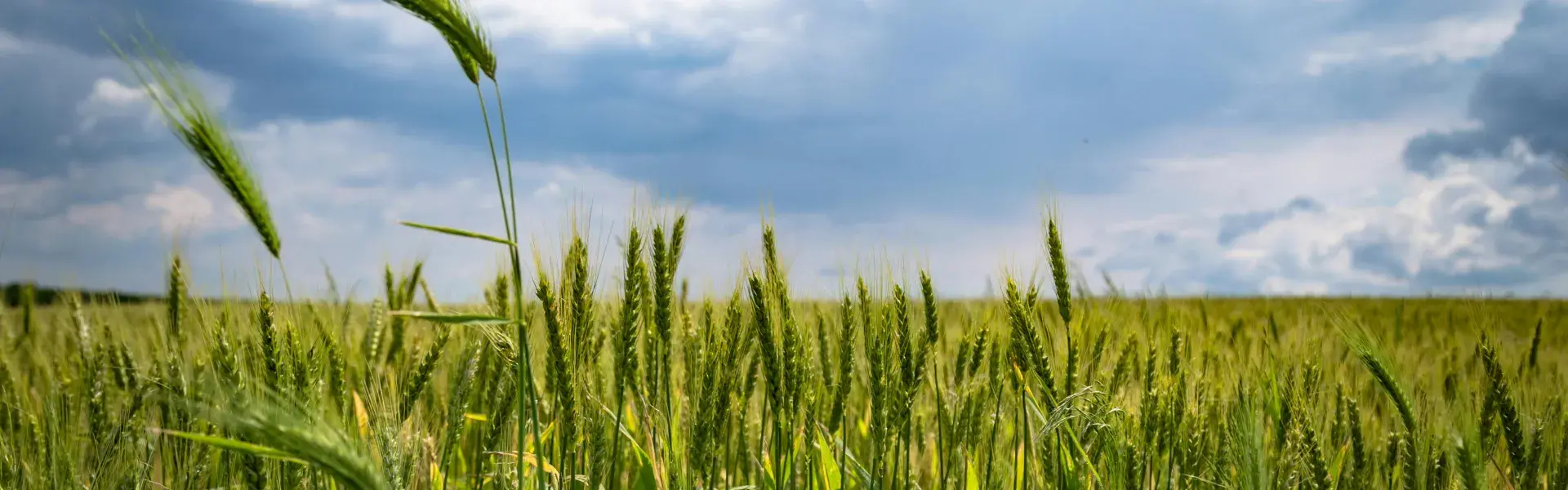
Used against broadleaved weeds and grasses; sprayed outside on fields of wheat and other small grain cereals, vegetables including beans and peas.
The alternative is mechanical weeding, widely available, e.g., using mechanical harrows and camera-guided mechanical hoes. Heating is another option. This can be done easily before planting and - with some experience - in and between the rows. Crop rotation also helps preventing dominant weeds to accumulate.