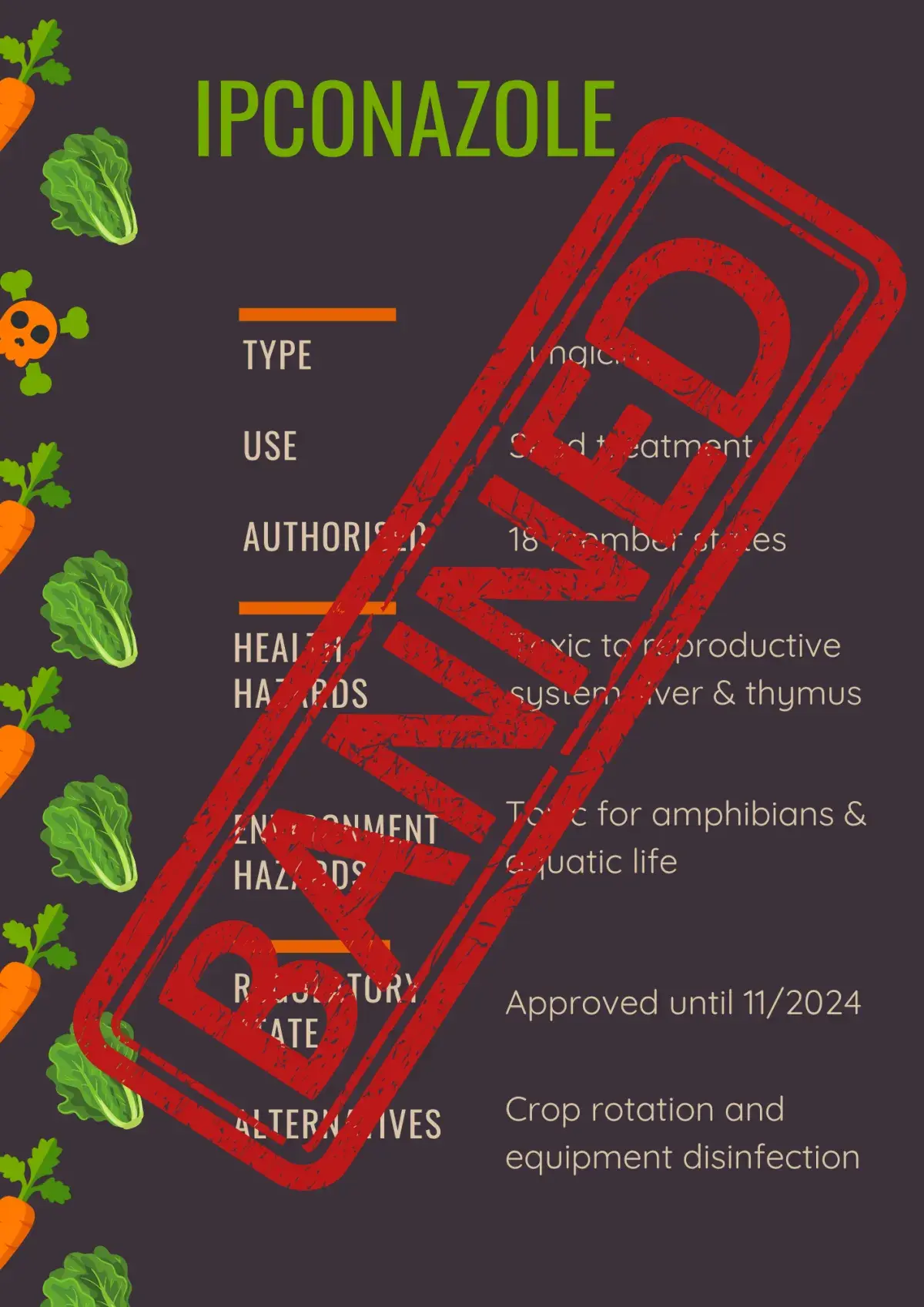
Toxic to the reproductive system: clear evidence connected to malformations in offspring (Classified “R1B”). Adverse health risks were also connected to effects on the liver, and the thymus gland, impacting the immune system.
High risk to non-target terrestrial vertebrates and other non-target terrestrial organisms. Poses long-term risks to small granivorous birds. Classified as very toxic to aquatic life with acute and long-lasting effects. Ipconazole exhibited high to very high persistence in soil and lasting metabolites.
Authorised in 18 member states.
Originally approved until 30/11/2024. Banned in the EU from 1.1.2024 because of it's high toxicity.
Applied as a seed treatment before planting outdoors, on a wide range of crops, including root and leafy vegetables, e.g., beet, carrot, radish, celery, fennel, lettuce, spinach, broccoli, cabbage and kale.