Type
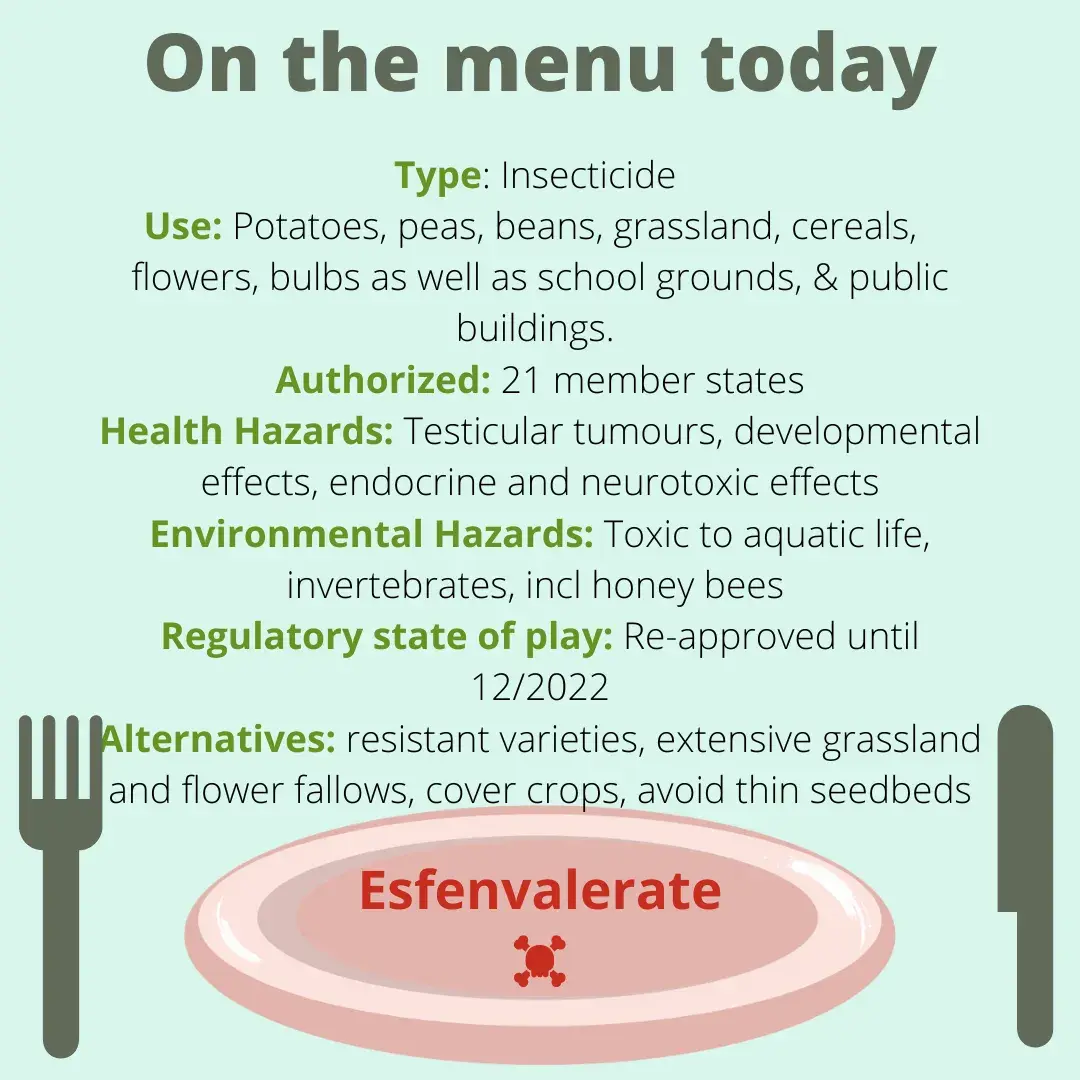
Insecticide (pyrethroids)
Health hazard level
4
Health hazards
Health risks connected to testicular tumours and developmental effects, endocrine and neurotoxic effects.
Environmental hazard level
4
Environmental hazards
Classified as very toxic to aquatic life with acute and long-lasting effects. High concerns for bioaccumulation; high risks for invertebrate animals and honey bees.
Exposure
Authorised in 21 member states.
Regulatory State of Play
In 2016 re-approved as Candidate for Substitution for 7 years, until the end of 2022.
Use
Used on potatoes, peas, beans, grassland, cereals including wheat. Used for non-agricultural settings such as schoolsgrounds, industrial sites, and public buildings.
Alternatives
Resistant varieties, extensive grassland and flower fallows, cover crops, avoid thin seedbeds.