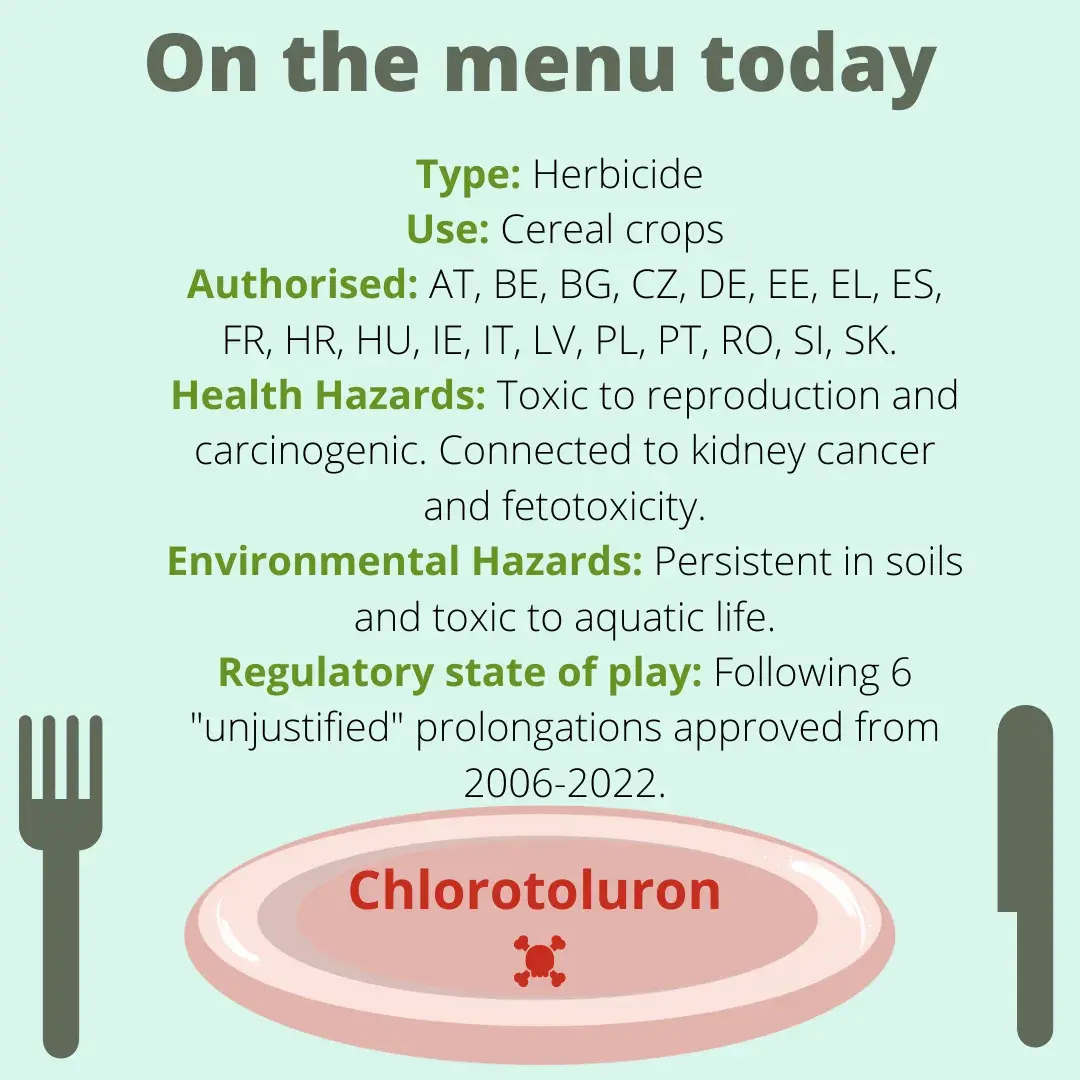
Classified as probably toxic to reproduction and carcinogenic (“R2” and “C2”). Studies found kidney adenomas and adenocarcinomas, and evidence for fetotoxicity. It was classified as a Candidate for Substitution due to its endocrine-disrupting properties.
Pestistant pollutant and indicated soil polluting and biodiversity risks, but proper assessment is lacking. Classified as very toxic to aquatic life with acute and long-lasting effects.
Authorised in 19 member states (AT, BE, BG, CZ, DE, EE, EL, ES, FR, HR, HU, IE, IT, LV, PL, PT, RO, SI, SK).
45 Maximum Residue Limits (MRLs) above the Level of detection (LOD) of 0.01 mg/kg are established, ranging from 0.012mg/kg to 0.1 mg/kg per product.
Following eight “exceptional” prolongations (each for one year), approved until the end of 2024. The last comprehensive review report was in 2006. The latest prolongation is challenged in EU Court by our French member Générations Futures.
Mainly used on cereal crops e.g. wheat & barley; used for early control of broad-leaved weeds and grasses; used as a foliar spray or applied to the soil prior to planting.